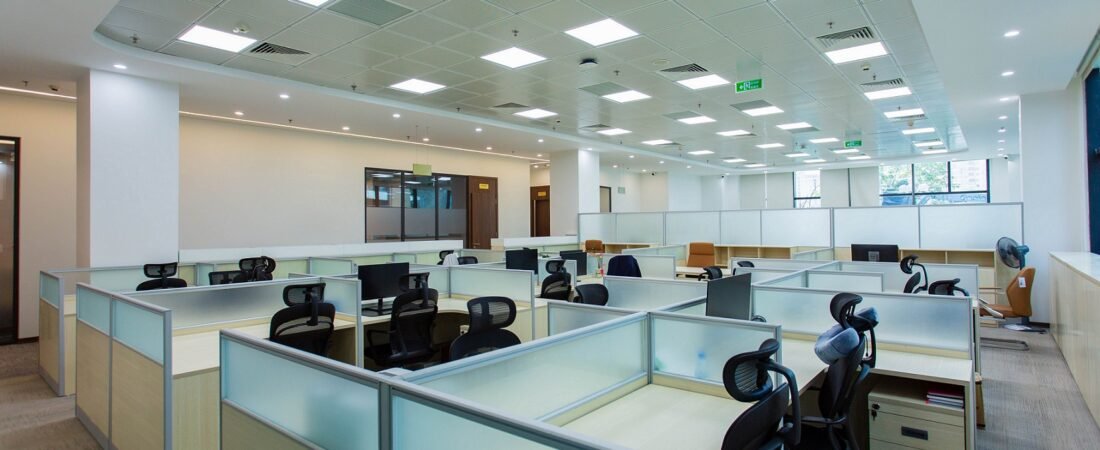
While boardroom discussions and client dinners capture the spotlight, our everyday micro-behaviors in the shared company spaces dictate our fundamental professional reputation. The way we move through communal zones reflects our baseline emotional intelligence (EQ), organizational discipline, and respect for the collective workforce.
Office common areas are a vital networking ecosystem. However, because these zones sit outside individual desk setups, professionals frequently drop their guard—leading to friction that strains facilities and office harmony.
At the Corporate Skills Lab, we treat every square foot of the corporate layout as a stage for our professional brand and executive presence. Here is our definitive guide to navigating the five primary office common areas etiquette rules seamlessly.
🔬 The Lab Report: 5 Office Common Areas Etiquette
- The Entrance & Parking Lot
Our professional workday begins the exact moment we cross the facility property line.
- Security Alignment: Cooperate fully with all security personnel. Greet them with an authentic smile and take the effort to learn their names. Treating support staff with dignity is a prime indicator of true leadership character.
- Parking Discipline: Position the vehicle responsibly and strictly within the designated spot, following all layout markings or instructions of the parking lot. Poor parking habits signal a chaotic execution mindset and lack of civic sense.
- Transit Patience: Never run aggressively toward the building elevators. It operates on a continuous cycle and will return down shortly.
- The Elevator Grid
Elevators are high-density, low-time environments where minor slip-ups cause immense discomfort.
- Directional Selection: Press the button corresponding strictly to the direction of travel—the up arrow to go up, and the down arrow to go down.
- Flow Order: Always stand clear and let people exit the cabin completely before attempting to step inside.
- Spatial Positioning: Stand facing the door without obstructing the exit passage. Proactively position at the back of the cabin if the destination sits on a higher floor than others. If the doors begin closing, press the console interface buttons rather than physically throwing your hands or feet between the sensors.
- The Audio Blackout: Stop conversations immediately upon entering the cabin. And definitely avoid shouting into the mobile device with phrases like “I am in the elevator, hello? Hello?” The ride takes a minute; respect the shared silence and resume the dialogue after exiting.
- Corridors & Transit Passages
Office hallways are intended for efficient transit, not group congestion.
- Pacing & Greetings: Walk at a measured, professional pace. Maintain an approachable demeanor, offering polite greetings while passing colleagues without escalating volume.
- Passage Clearance: Avoid gathering in groups of two or more to hold casual updates in the center of busy hallways, which create physical bottlenecks for transit.
- Friction-less Passing: If a corridor is blocked by lingering colleagues, say “Excuse me” clearly and confidently to signal approach, then move smoothly through the passage.
- The Workstation Bay Area
The desk bay is a collective space with individual designated workstations where focus must be actively respected. More importantly, protecting individual concentration zones in an open floor layout is essential. According to an extensive field study published by the Harvard Business School Faculty Research (“Harvard Open Workspace Behavioral Study”), transitioning teams into open architectural layouts without clear structural boundaries actually causes face-to-face interaction to drop by roughly 70% as employees naturally withdraw to preserve privacy.
- Acoustic Control: Regulate the volume of voice during calls to avoid disrupting nearby teammates.
- Data Boundaries: Never peek at or audit a colleague’s monitor screen while walking past their workstation.
- Physical Stance: When approaching a colleague’s desk for an update, stand opposite them or in front of their desk. Avoid hovering right next to or behind their shoulder, which violates professional personal space.
- Sanitary Discipline: Avoid consuming heavy meals directly on the workstation desk. Lingering food scents drop productivity and invite office pests. Keep dining restricted to the cafeteria.
- Distraction Limits: Eliminate loud gatherings or spontaneous noises unless the event is a planned organization or HR activity communicated in well in advance.
- The Corporate Washroom
The foundational rule of shared facilities is absolute: “leave the space exactly the way we expect to find it.”
- Administrative Compliance: Strictly follow all hygiene protocols posted by the facilities and administrative management teams.
- Mirror & Basin Hygiene: Prevent water from splashing onto the mirrors. Avoid shaking wet hands aggressively over the counter space; drain hands over the basin before reaching for the drying station.
- The Privacy Wall: Eliminate office gossip, venting, or project tracking inside the washroom. We never know who is sitting in the adjacent stall listening to the data points.
- Sustainability Metrics: Minimize carbon footprint. A single paper towel is statistically sufficient to dry hands effectively. Let excess water drip into the basin first, then use exactly one sheet or leverage the automated hand dryer to reduce systemic corporate waste. In fact, many organizations have nowadays gone with a no paper towel policy in the washroom by default.
- Proactive Reporting: If there is a broken fixture, an empty dispenser, or a water leak, immediately notify the housekeeping staff rather than leaving it for the next person to navigate.
🧪 The Lab Report Summary: The Final Verification
Shared office common areas etiquette are the ultimate window into our baseline professional standards. Treating parking lot security, elevator crowds, and office washrooms with uniform respect proves that executive presence isn’t just an act for boardroom meetings—it is a foundational component of our personal corporate brand. The Office cafeteria is another big space which we did not cover in this article and have detailed it in “The Break Room Lab: Office Cafeteria Etiquette“.

- Set of 2. Gold and White, very small and cute. Size: 2 x 1.6 x 3.5 (Length x Width x Height) inches.
- Using high-quality ceramic material, and artificial surface polishing technology, looks elegant and Modern, smooth and s…
As an Amazon Associate, we earn from qualifying purchases at no extra cost to you.