In modern workplaces, teams are highly specialized groups of experts in their respective fields. Software developers, data analysts, financial experts, HR and legal teams speak their own language. While being technical makes sense with peers in the same domain, it becomes a challenge when presenting to cross-functional stakeholders, managers, or clients.
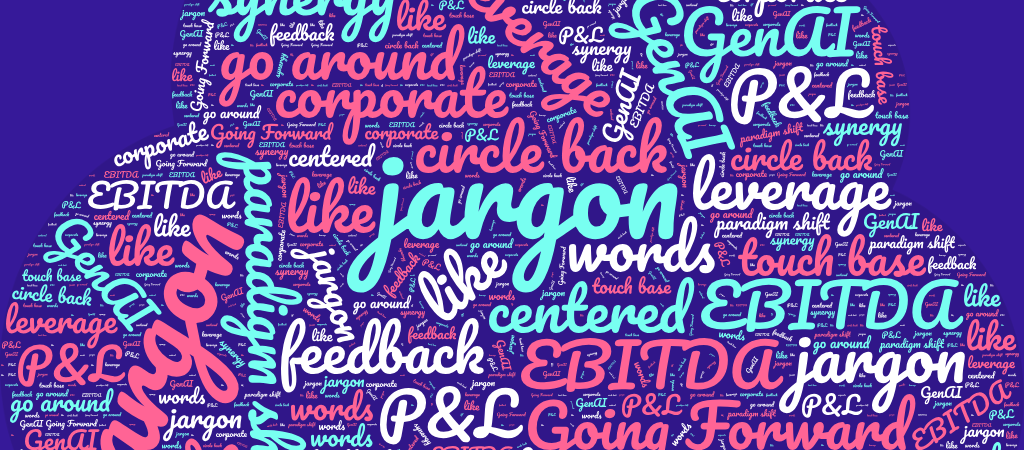
We have all used or heard those famous corporate buzzwords like “synergy,” “touch base,” or “paradigm shift.” We assume that complex language makes us look competent. In reality, it only creates confusion, causes delays, and isolates non-technical audiences.
True communication skills are not about making simple ideas sound complicated. It is about taking complex data and make it make sense to anyone in the room. Learning how to simplify complex ideas is an essential power skill that builds trust and collaboration.
At the Corporate Skills Lab, we treat professional clarity as a metric. Here is the operational framework to strip away toxic corporate speak and communicate with high impact.
🔬 The Lab Report: 3 Rules for High-Clarity Communication
- ELI5 (Explain It Like I’m 5)
The ELI5 framework does not mean treating an adult audience like children. Instead, it means not assuming that they have prior knowledge.
- The Problem: When an engineer says, “We are experiencing high latency due to an unindexed database query causing threads to exhaust,” a sales director hears gibberish.
- The Framework: Focus on the business impact and remove the engineering jargon: “Our data storage system is currently unorganized, which slows down the page loading time for our users by 4 seconds. The team is working to restore standard speeds.” [read: art-of-status-updates]
- Use Metaphors
Humans process information much faster with visual concepts they already understand. When describing complex software architecture, financial risk models, or supply chain bottlenecks, map them to simple real-world metaphors:
- A Database Index: Compare it to the index page of a thick textbook. Instead of flipping through pages to find a topic, you go straight to the index to save time.
- A Server Bandwidth Constraint: Compare it to a physical highway bottleneck during peak commuting hours. The vehicles are fine, but the road lanes are too narrow to handle the volume simultaneously.
- No Corporate Buzzwords
Corporate lingo often conveys a lack of concrete data or clear planning. Using over-hyped phrases dilutes the key message and creates confusion [read: words-and-phrases-to-avoid-in-work-communication]. Clean up your vocabulary by running a permanent delete command on these empty buzzwords:
|
Toxic Corporate Speak |
The High-Impact Replacement |
|
“Let’s take this offline and circle back.” |
“Let us schedule a brief sync tomorrow to finalize this.” |
|
“We need to leverage our core competencies.” |
“We should focus on our team’s existing technical skills.” |
|
“We require a holistic, paradigm-shifting strategy.” |
“We need to improve our daily operational workflow.” |
|
“Please socialize this layout across the matrix.” |
“Please share this with the concerned teams for feedback.” |
📋 3 Practical Communication Scenarios (Before vs. After)
Scenario 1: Technical Software Delay
- ❌ Unfiltered Jargon: “The API integration is throwing a 500 internal server error because the JSON payload formatting is completely mismatched with the web-hook endpoint.”
- 🟢 The Clarity Filter: “The two software systems are currently speaking different data languages, which stops them from exchanging files cleanly. To sort this, the team is correcting the script today to restore smooth data flow.”
Scenario 2: Financial Budget Variance
- ❌ Unfiltered Jargon: “We are experiencing negative cost variances due to macro-inflationary tailwinds impacting our operational expenditures across the vendor matrix.”
- 🟢 The Clarity Filter: “Our monthly costs ran 8% over budget because our external suppliers raised their rates this quarter.”
Scenario 3: Cross-Departmental Collaboration
- ❌ Unfiltered Jargon: “We need to break down departmental silos, build deep synergy, and open the kimonos on our Q4 pipeline metrics.”
- 🟢 The Clarity Filter: “We need the sales team and the product team to share their quarterly goal sheets transparently so we can plan our project resources accurately.”
🧪 The Lab Report Summary: The Ultimate Test
Simplifying complex ideas is a true marker of professional mastery and high emotional intelligence. By applying the ELI5 framework, mapping data to clear metaphors, and systematically removing buzzwords, we show how to simplify complex ideas. Before entering any executive review or cross-functional presentation, run this final test: Can a colleague from an entirely different department listen to this summary and explain the core message back accurately in one sentence? If they can, you have mastered the art of clear, impactful business communication.

As an Amazon Associate, we earn from qualifying purchases at no extra cost to you.