
In the global corporate ecosystem, huge business decisions are frequently decided by things that sit outside technical capabilities or baseline service level agreements (SLAs). While organizations invest heavily in engineering excellence, infrastructure, and delivery metrics, the ultimate catalyst for securing international client partnerships is trust. Trust is an aggregate metric built from the visual, verbal, behavioral and cultural signals displayed by the workforce.
When international clients assess an organization, every micro-behavior may be analyzed as an indicator of internal conscientiousness, operational alignment, and corporate culture. A single systemic divergence from corporate culture and behavior standards can quietly derail months of rigorous business development execution.
At the Corporate Skills Lab, this entry analyzes a real-world case study to evaluate the psychology of professional compliance, the baseline profile of “White Socks Syndrome,” (ref.) and how subtle wardrobe choices can unintentionally project corporate rebellion.
🔬 The Lab Case Study: The Strategic Cost of a Silent Signal
Consider the scenario of a large size Indian IT services firm preparing for a high-stakes facility visit from a prospective global client. The client requested an on-site assessment of the delivery center to gauge team synchronization and cultural fit before finalizing a major contract. The delivery manager formally briefed the project team, detailing the strategic importance of the project, outlining the client’s operational background, and explicitly requesting that everyone transition from standard casuals to formal business attire for the days of the visit.
On the day of the visit, the site tour proceeded seamlessly: the client interacted with the technical teams, inspected the infrastructure, completed a guided city excursion, and departed back to their country.
However, after follow-ups, the contract was ultimately denied. Upon detailed inquiry regarding the rejection, the client provided a startling diagnostic insight: “The workforce appears to be slightly rebellious in nature; it is uncertain whether they can collaborate effectively with the home team.”
When pressed for the data point that led to this sweeping conclusion, the client identified a single, uniform visual detail: the common sight of white athletic socks with dark formal trousers across the delivery floor.
To the delivery management team, this revelation felt like a disproportionate critique. Yet, to the international client, a collective failure to execute a baseline dressing mandate signaled a deeper organizational issue. The white socks functioned as a visual proxy for a workforce that pathologically cuts corners, ignores structural guidelines, or actively pushes back against standard compliance structures. Years of technical excellence were undermined by a minor, uncalibrated wardrobe detail.
🧦 Diagnosing “White Socks Syndrome” in the Modern Workspace
This specific type of workplace oversight highlights a structural concept termed “White Socks Syndrome” as earlier referenced. This condition refers to an mental or operational state where a professional possesses strong technical capabilities but remains entirely blind to the subtle, unspoken visual and etiquette codes that govern executive spaces.
The white socks act as a visible indicator of an underlying disconnect. To a global client or an internal senior executive, a working professional exhibiting White Socks Syndrome projects an image of being unpolished or subtly defiant. It signals a foundational truth: if an individual cannot manage basic styling details, leadership cannot guarantee they will manage high-stakes project variables under pressure.
This syndrome does not operate in a vacuum. It is the visual tip of the iceberg, often correlating with other everyday behavioral slips across an organization:
- Deliberately bypassing minor internal company operational policies.
- Disregarding facility parking slot markings and attendant guidelines.
- Engaging in counter-productive workplace gossip within shared common spaces.
- Abandoning professional boundaries during relaxed corporate social events.
🧠 The Behavioral Breakdown: Education Deficit vs. Cultural Defiance
When White Socks Syndrome manifests on a corporate floor, the underlying behavior must be classified into one of two distinct categories:
- The Education Deficit (The Knowledge Gap)
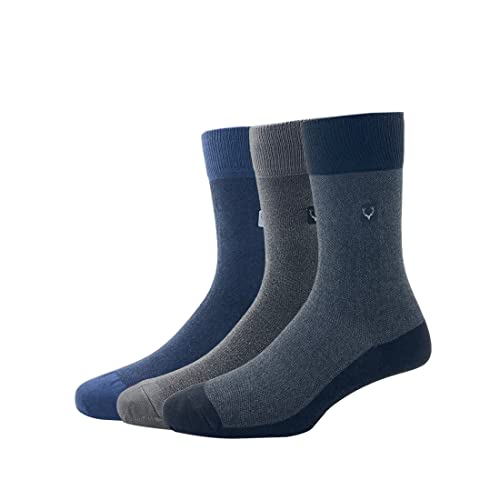
For a segment of the workforce, wearing white athletic socks with dark formal trousers is simply an information gap. If individuals have never been systematically educated on the core rule of formal styling—that socks must always match the color tone of the trousers, not the footwear—the behavior is an accidental oversight. This operational gap is highly workable through structured training, visual tool-kits, and early awareness during onboarding programs.
- The Cultural Defiance (The Sub-Conscious or Intentional Drift)
A more complex challenge arises when professionals are fully aware of established guidelines yet choose to consciously ignore them. This behavior is not an education issue; it is a cultural and behavioral compliance issue. When a workforce finds it acceptable to routinely compromise minor rules, it establishes an internal culture of casual defiance. In high-stakes B2B environments, global clients perceive this structural drift as an operational risk to project governance, data security, and systemic quality. This also affects the branding of the organization for prospective talent to hire.
📈 Structural Remediation: Early Intervention Strategies
To mitigate these reputational vulnerabilities, organizations must address both the educational and cultural dimensions of employee behavior:
- Integrated Early Upskilling: Traditional corporate dressing and professional etiquette training must move beyond basic “campus-to-corporate” training programs. These principles should ideally be introduced much earlier within foundational educational institutions to build professional muscle memory before an individual ever steps onto an office floor.
- The Duality of Deviation: Behavioral non-compliance is a powerful tool when calibrated correctly. When channeled constructively, deviation drives innovation, challenges stagnant status quo, and leads to transformative breakthroughs. However, when applied destructively to baseline administrative discipline, it results in an I lose-You lose mindset that compromises collective growth.
🧪 The Lab Report Summary
Workplace professionalism is an ecosystem where every detail matters for corporate culture and behavior. White Socks Syndrome proves that managing the subtle signals sent by a workforce is just as critical as managing software code or financial assets. Ensuring absolute alignment with baseline professional codes safeguards global corporate brand reputation and removes unnecessary friction from the path to international scale. We are not proponents of rigid and imposing rules, and respect the personal choice people rightfully have to wear what they want. We look at this from an alignment perspective to the brand image that the organization wants to portray.
For comprehensive, actionable blueprints on avoiding costly fit and footwear errors, read the finalized Corporate Skills Lab guides to building a professional wardrobe for men and women.

As an Amazon Associate, we earn from qualifying purchases at no extra cost to you.